A startup trained an AI video model on rat neurons — now it's live on AWS

The Biological Computing Company (TBC) went live on Amazon Web Services on September 22, putting what it calls the world's first neuron-derived AI video model in front of enterprise customers. Founded around 2022 by two neurosurgeons in Baltimore, the startup has raised more than $50 million and landed a high-profile AWS partnership to prove that biology can make AI inference cheaper. If the claims hold up, it could shift how companies pay for AI video generation.
The biology
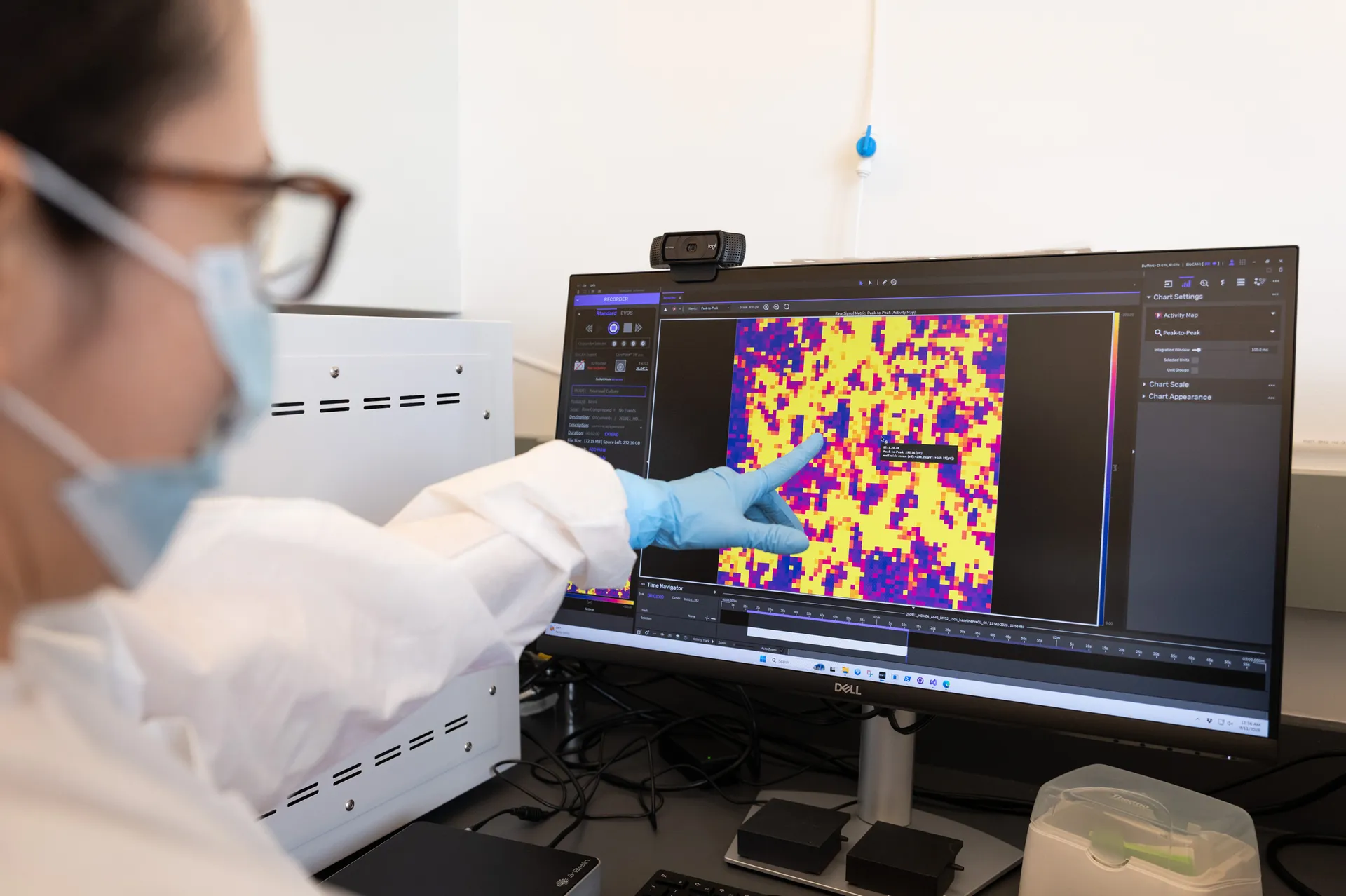
TBC grows rat brain neurons and human stem cells on multi-electrode arrays built by Swiss firm 3Brain. Each array carries 4,096 electrodes that feed electrical signals encoding visual information into the cells, then record how they fire back. Those response patterns get translated into a software layer that sits on top of a standard video model — the base model's identity is kept secret. The layer adds less than 0.1% computational overhead, so customers run it on existing GPUs or AWS Trainium chips with no new hardware required, per the AWS Press Center.
The claim — and the caveat
TBC says its approach cuts video generation time by 5x and inference costs by 80% compared to the underlying open-source model. Jeff Dean, a Google investor who advised the company, reportedly pushed TBC to start with video because established benchmarks exist there. The model is available now through AWS SageMaker and the AWS Marketplace, with early access for selected customers.
The numbers, though, are self-reported. As The Next Web notes, TBC has published no independent benchmarks, and the figures cannot be verified against named competitors like Sora, Veo, or Runway. The AWS head for startups, Deep Ubhi, flagged a specific open question: whether the efficiency gains hold for long-form video, where models need to keep objects consistent across hours of footage.
The wider field
TBC is not alone in this space. Switzerland's FinalSpark launched a commercial organoid computing platform in May 2024, and Australia's Cortical Labs released its CL1 hardware in March 2025. What separates TBC is its software-only approach — no biological hardware ships to the customer — which lowered the barrier to an AWS deal and made enterprise adoption more practical.
The positioning is deliberately B2B. This is not a consumer tool for creators competing with Runway or Adobe. It targets companies running large inference workloads who want to cut cloud spend. Whether 80% savings materializes in production — and whether video quality holds at scale — will only be answered once independent testers get access.


