ETH Zurich built a robotic hand that walks on its fingers

A robotic hand that walks on its own fingers, presses keyboard buttons, and recovers from falls sounds like a prop from a sci-fi film — but it's the latest research out of ETH Zurich's Soft Robotics Lab. The system is designed for confined spaces where larger robots simply cannot fit: server racks, industrial shelving, and collapsed structures are the target environments. At just 818 grams (about 1.8 lbs), it's compact enough to go where Boston Dynamics' Spot cannot.
Five fingers, 20 joints
The hand is built on the commercial WUJI robotic hand — a platform that costs around $16,000 — augmented with a Raspberry Pi Zero 2W, a small battery, and an inertial measurement unit (IMU) mounted on the back. That gives it 20 actuated joints across five fingers, four per finger, all used for both locomotion and manipulation. Earlier attempts at walking robotic hands used uniform fingers, which caused balance problems. This design mirrors real human hand proportions — asymmetric finger lengths — and uses reinforcement learning (an AI training method based on trial and error) to coordinate movement across uneven terrain.
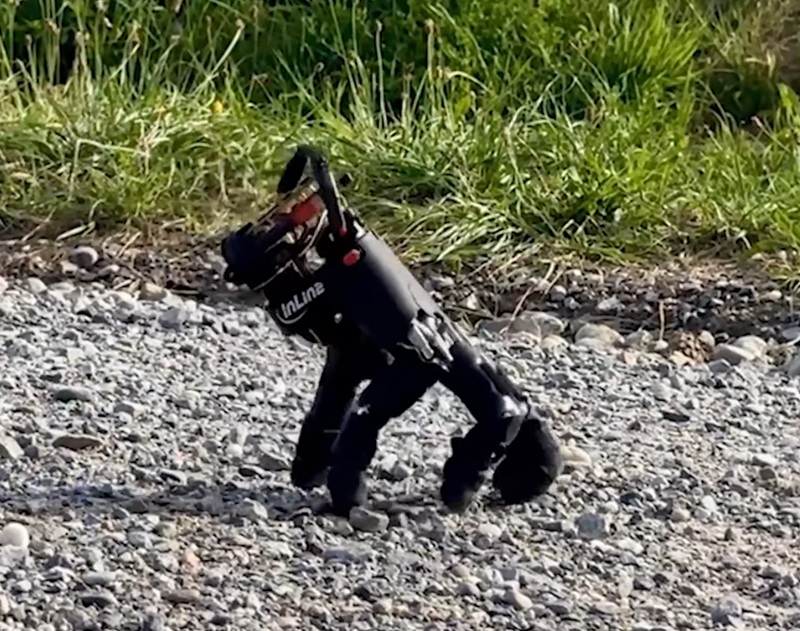
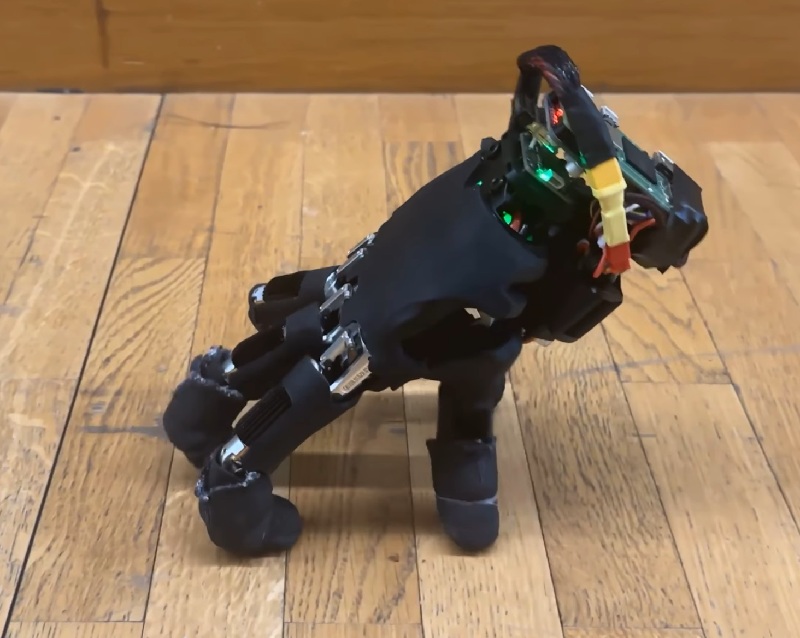
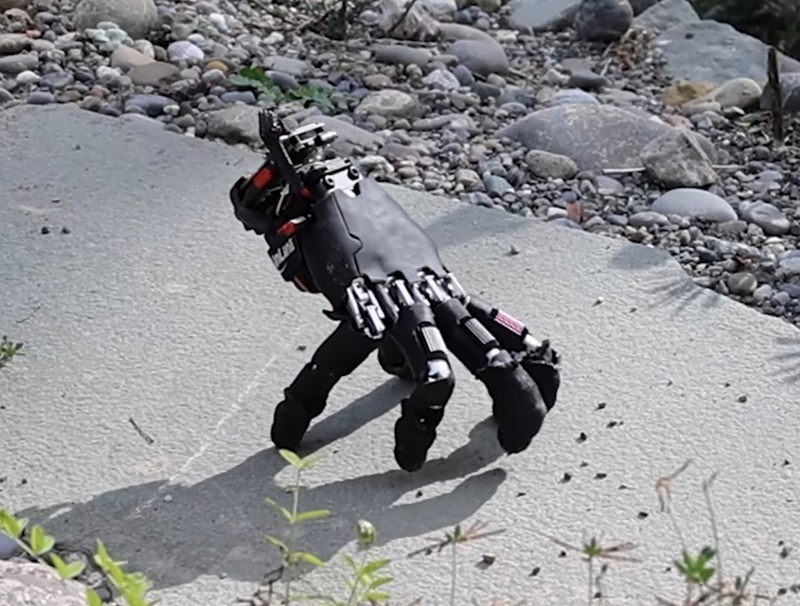
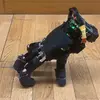
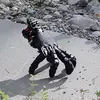
The results, published on arXiv under the title Fingers as Legs, are surprisingly capable for such an odd-looking machine. The hand crossed 14 different surfaces including carpet, tile, asphalt, grass, gravel, weathered stone, and metal grating — all without a tether. In fall-recovery tests, it righted itself and kept moving in 21 of 25 attempts. Asked to press specific keyboard keys by recognising what was on screen, it hit the correct key 29 times out of 32, per DesignBoom.
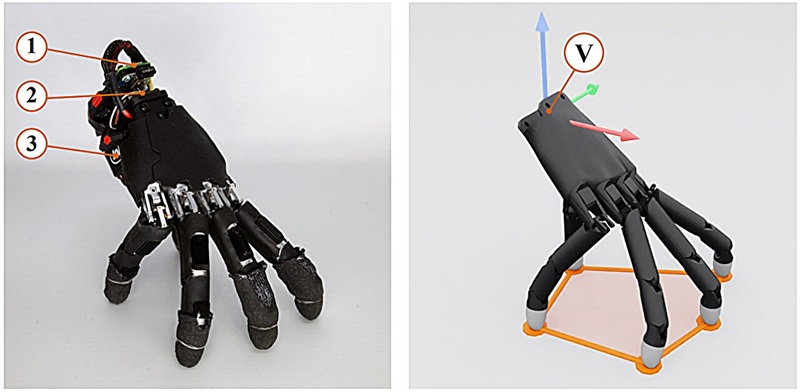
The robotic hand uses human-proportioned asymmetric fingers to maintain balance during locomotion. Photo: Soft Robotics Lab
What it's actually for
The lab frames this as "loco-manipulation" — merging mobility and grasping into a single limb rather than bolting an arm onto a wheeled or legged platform. The appeal is size: a hand-crawler can reach places a quadruped robot never could, including the interior of a server rack or a narrow gap in industrial shelving. The concept shares some DNA with the Stringman ceiling-mounted robot, another recent attempt to rethink where robots can operate.
The tradeoff is speed. Walking speed is roughly 1.67 cm/s — about 100 times slower than Spot's 1.6 m/s cruising pace. Durability under continuous load is also unresolved; the WUJI actuators were designed for grasping cycles, not sustained weight-bearing locomotion. This is research-stage work with no commercial availability announced, but the confined-workspace problem it targets is real — and underserved by the mobile robotics platforms that dominate the US market.


